Coastal Birds
Chichester Harbour is nationally and internationally important as a site for coastal birds. Tens of thousands of wading birds and waterfowl migrate here for the winter, and threatened species of seabirds and waders breed here in the summer.
The bird populations of Chichester Harbour are under significant pressure. Disturbance from people and dogs impacts a bird’s ability to survive the winter or nest in the summer. Rising sea levels are decreasing available areas of high tide resting and nesting sites. There is significant competition for the existing sites within the harbour and nests of some species will often be flooded by spring high tides before their eggs have hatched.
What is recreational disturbance?
Recreational disturbance refers to someone taking part in an activity that:
- Physically harms wildlife, resulting in injury or death
- Can make wildlife change their behaviour
- Causes damage to habitat
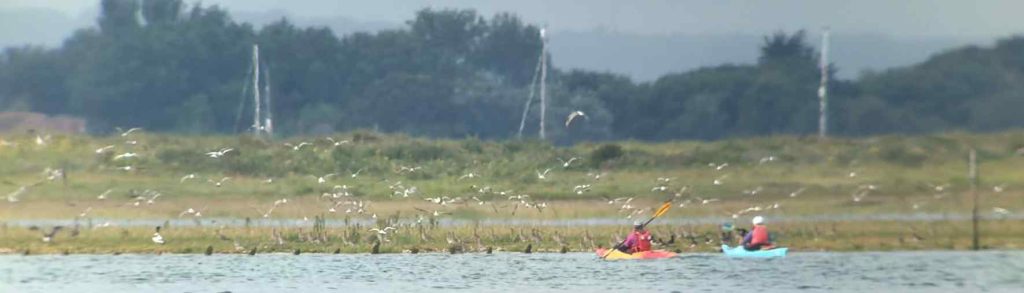
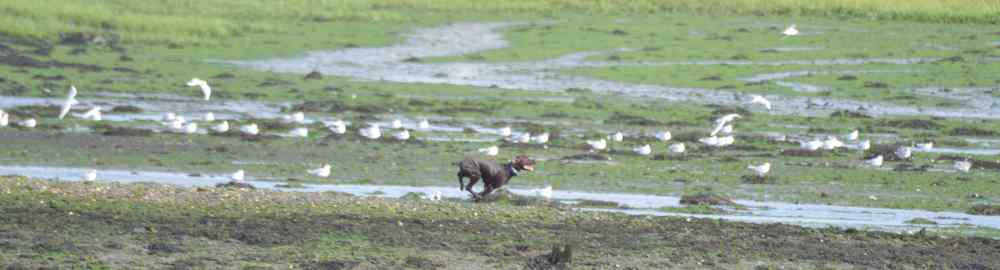
For example, if people stray too close to birds they will ‘flush’. Birds flush when they are startled, threatened, or forced from cover, taking flight suddenly to escape, often triggered by dogs, noise, or movement. In wildfowling, this act is used to identify and target certain birds, while for others, it simply causes unnecessary, harmful stress to the birds. To put this in context, some overwintering birds have flown 3,000 miles to get to Chichester Harbour to rest and recuperate – if they alerted to danger by way of people and dogs, they will not get the chance to do so. If the birds are frequently disturbed, they will ultimately leave Chichester Harbour to find somewhere quieter.
With a growing population, the people pressure on Chichester Harbour is increasing. The developers of all new dwellings are required to pay a levy to help offset recreational disturbance. This levy goes to Bird Aware Solent to help pay for Rangers and Suitable Alternative Natural Green Spaces (SANGS), which are new and dedicated dog walking friendly parks, interpretation panels and monitoring.
How are bird habitats conserved and enhanced?
Many birds chose the nest on the water’s edge, where are good lines of sight with plenty of nearby food. However, with sea level rise and the installation of hard sea defences over past decades, the number of suitable coastal sites for birds to nest has decreased, resulting in declining bird populations.
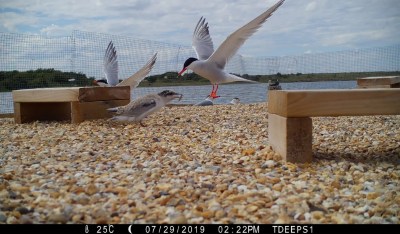
The Return of Tern project was developed to trial a shingle recharge at Stakes Island and increase the number of tern rafts at Thorney Deeps, Eames Farm. The project was a success as the population of Common Terns is increasing, and for the first time in 20 years, Little Terns fledged from Chichester Harbour in 2025. However, there is still a lot of work to do as there are many other bird populations that need support, the shingle recharge needs to be extended, and locations for new bird islands are to be identified.
The ChaPRoN Partnership will be developing plans over the coming years to help take this important work forward.