Oyster cages – native oysters under harbour jetties
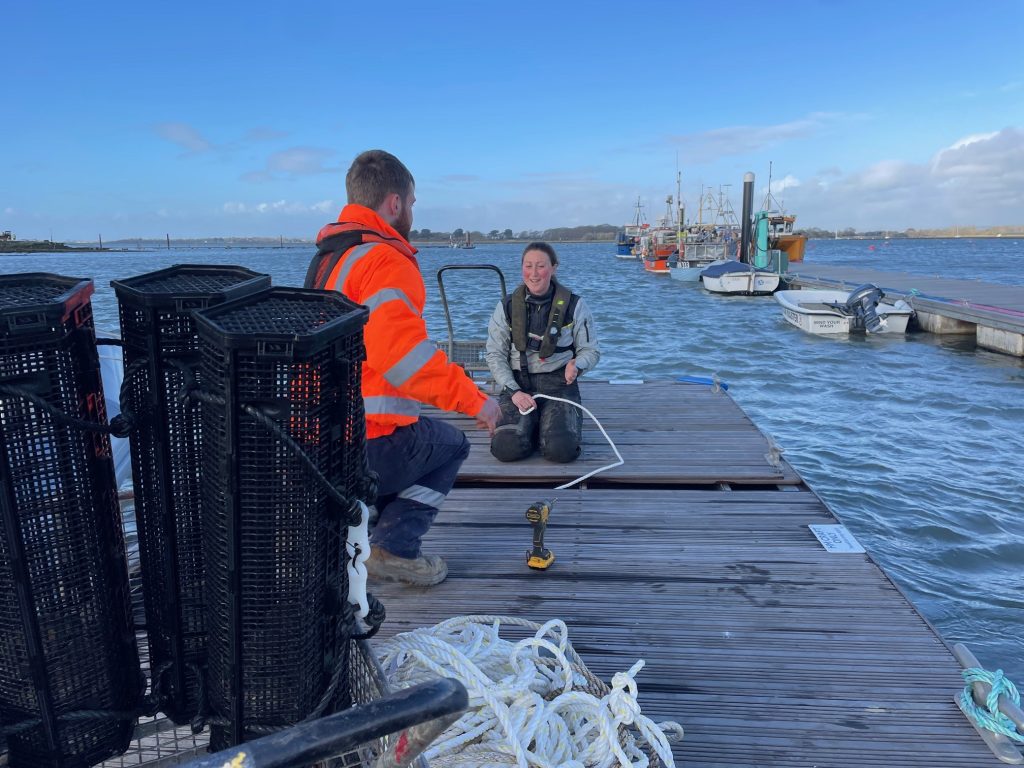
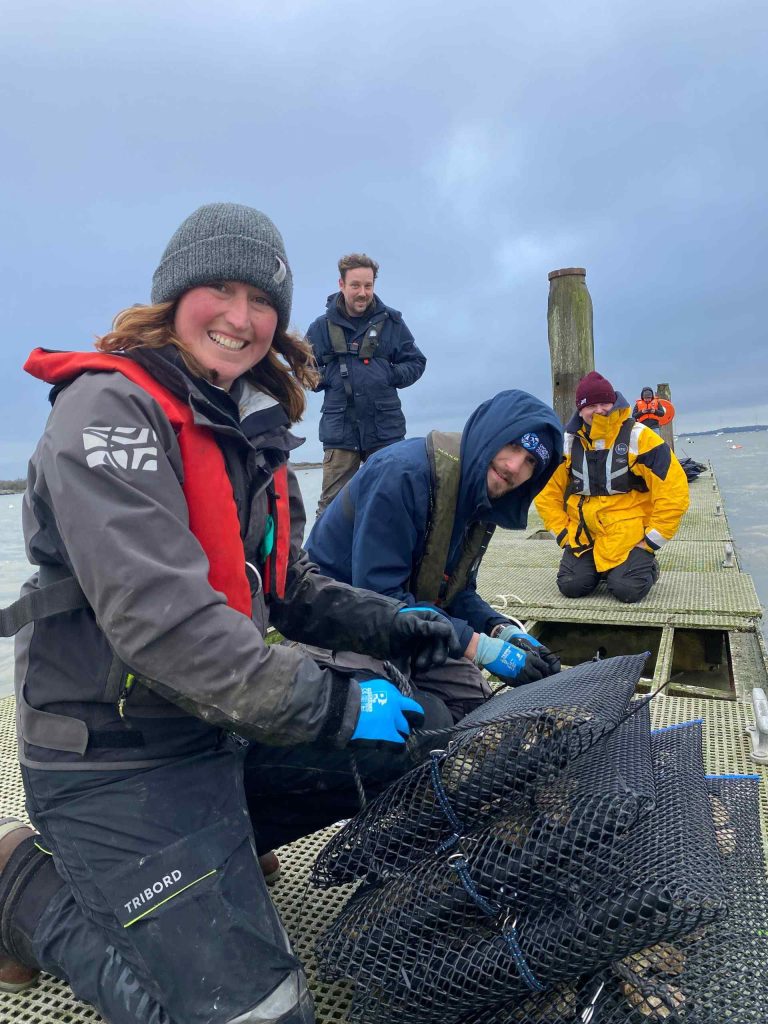
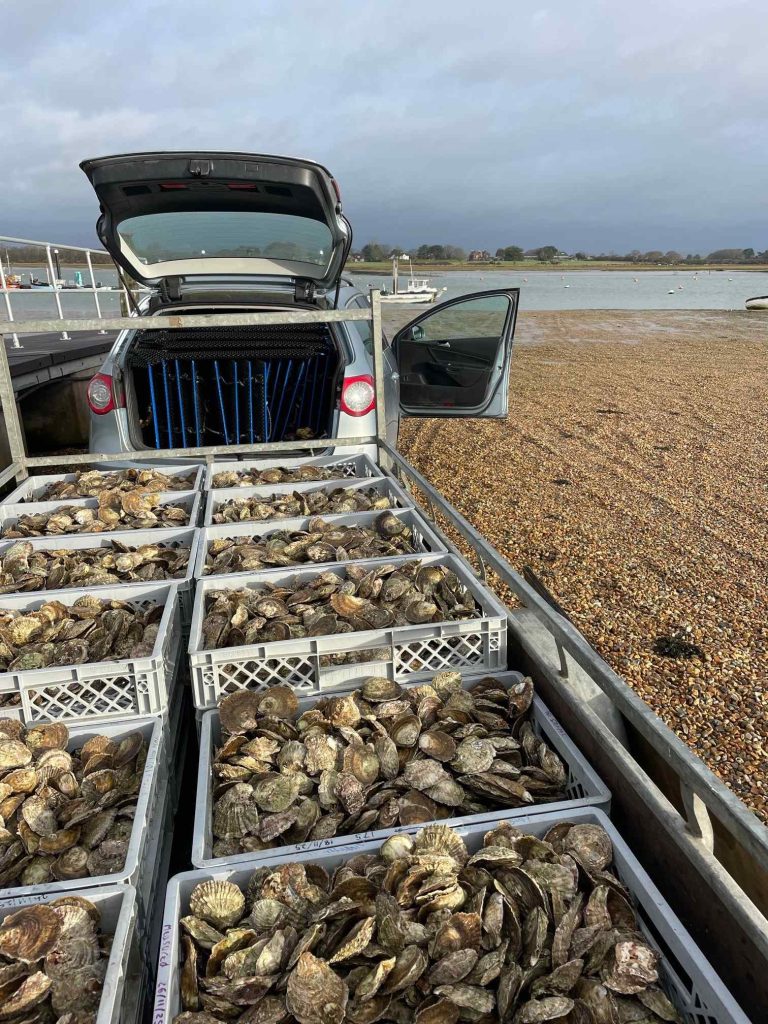
In 2026, Chichester Harbour Conservancy partnered with Harbour Oysters to install native oyster in cages under jetties and pontoons in Chichester Harbour. In total over 15,000 native oysters have been secured in cages at Itchenor and Emsworth.
This is in addition to 4,000 native oysters installed at Emsworth Yacht Harbour in 2025. Local environmental charity, Chichester Harbour Friends has supported the project with funding and volunteer time.
Why Native Oysters?
For hundreds of years native oysters were abundant in Chichester Harbour. But native oyster populations across Europe have plummeted by 95%. This is due to over-fishing, habitat loss, predation, pollution, and invasive non-native species. Native oysters bring significant environmental benefits including for water quality. One oyster alone can filter up to 200 litres of water per day. They also remove nitrogen, sequester carbon and provide habitats for other marine life.
These native oysters will remain in their cages. But they will play a vital role in promoting the success of native oyster habitat restoration work. They will release millions of spat (larvae) into the harbour waters. Each of these has the potential to settle and grow into an adult oyster!
Community-based nature restoration
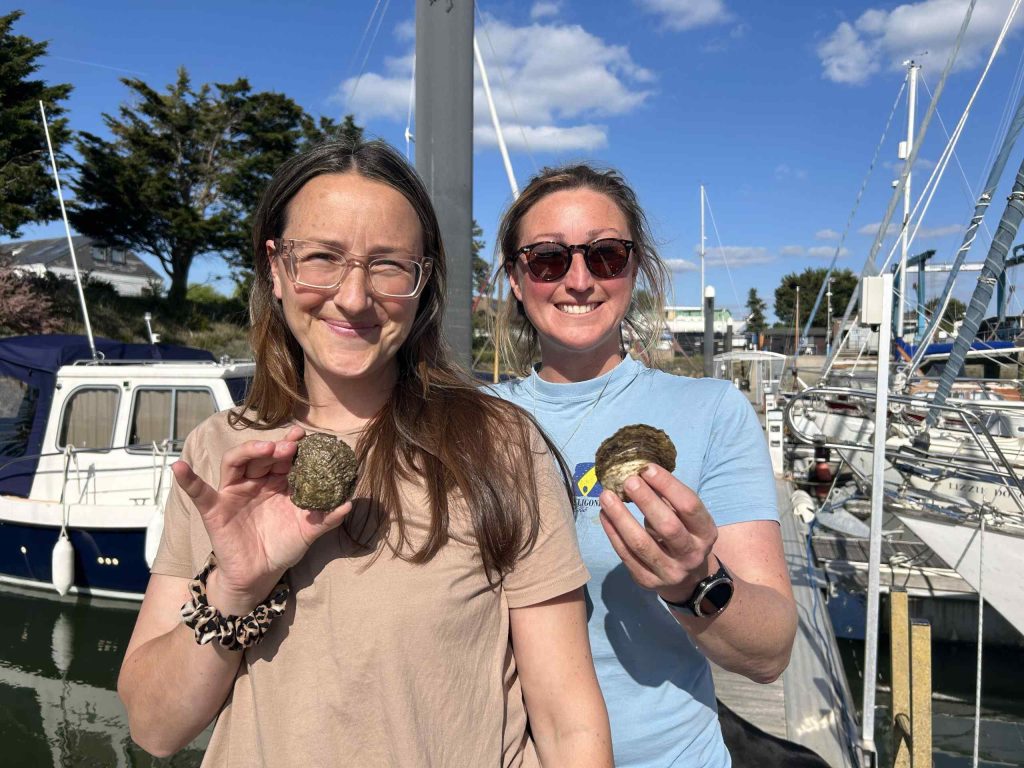
Harbour Oysters is the brainchild of local sisters Lottie and Poppy Johns. They were inspired to harness the power of nature to help clean up our harbour waters. Following significant research and trials, in 2026 Harbour Oysters installed 4000 oysters in Emsworth Yacht Harbour. They have plans to expand their native oyster restoration beyond Chichester Harbour. Read more about the inspiration behind Harbour Oysters in the 2026 edition of Harbour Life.
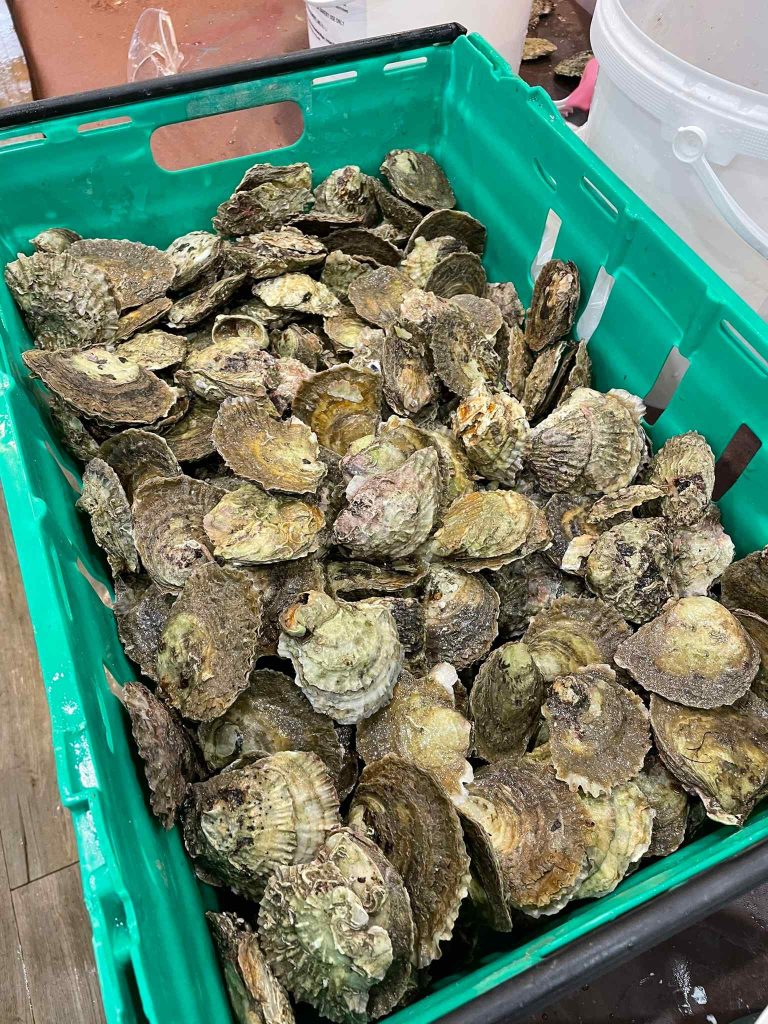
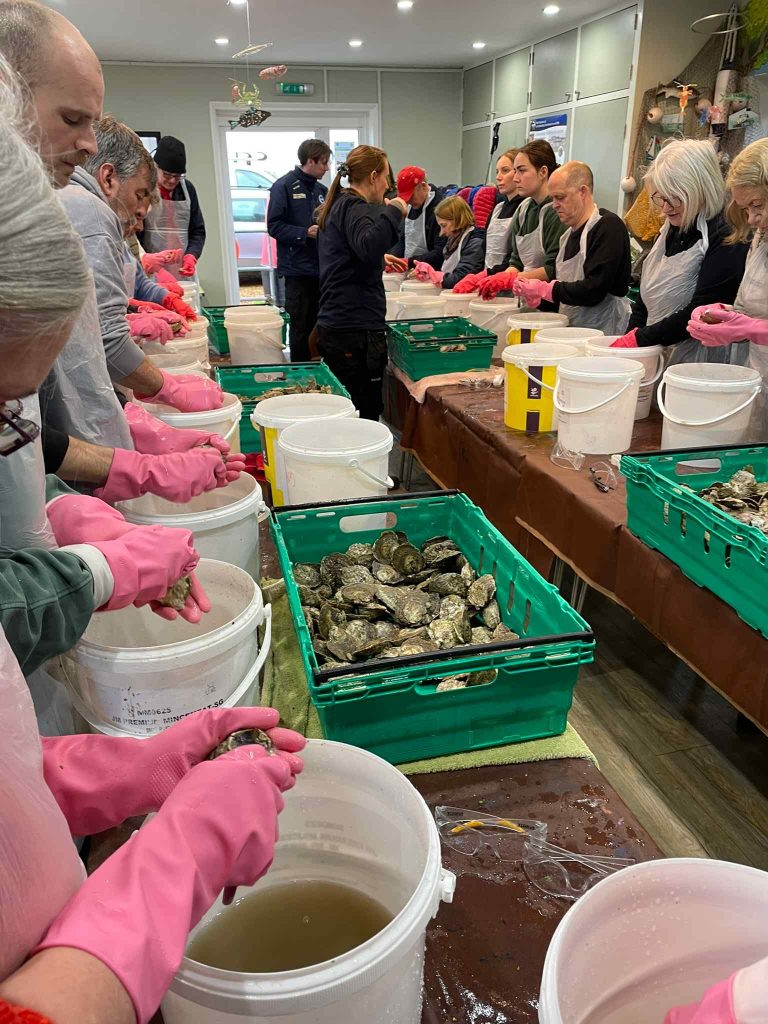
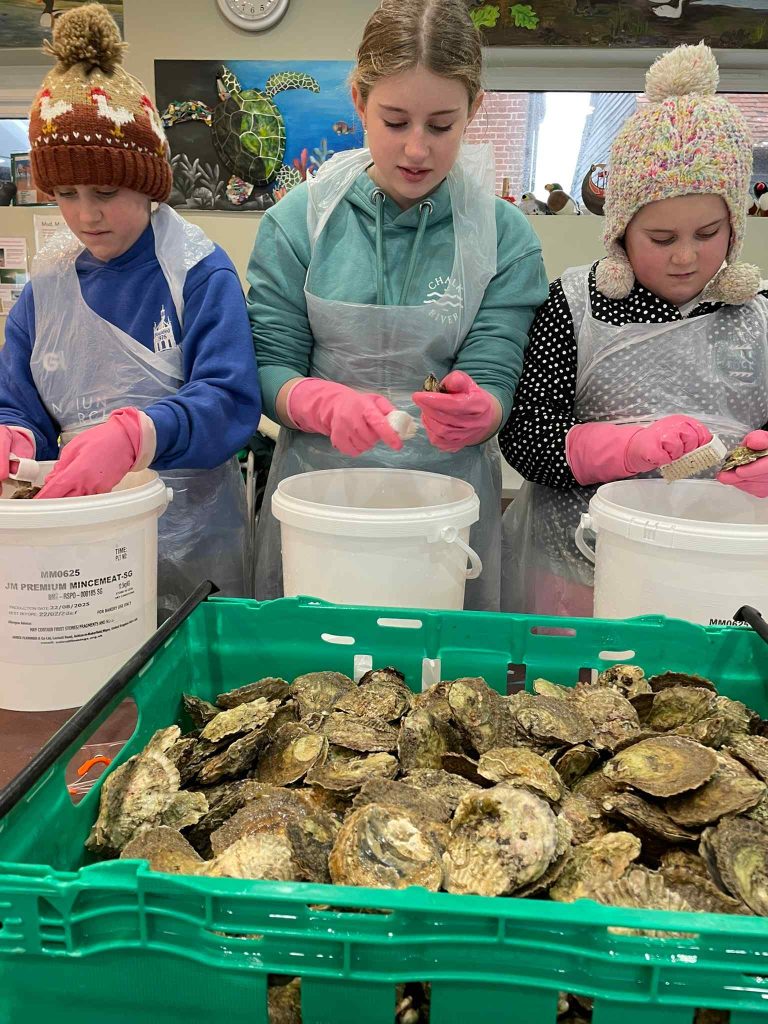
The local community has been heavily involved too. More than a hundred volunteers have gave their time to scrub the oysters. This was for biosecurity before they entered the waters of Chichester Harbour.
Oysters in the “wild”
As Harbour Oysters continues to roll out native oysters in cages within Chichester Harbour and beyond, there will be thousands of oysters under marine infrastructure like jetties and pontoons. But in the wild, oysters live on the seabed, forming shallow reefs. This spring the Solent Seascape Project will undertake a large scale “wild” restoration of native oysters in Chichester Harbour, creating natural habitat on the seabed.
Working in partnership
Partnership working is key to nature recovery success and the ongoing collaboration between Harbour Oysters, Chichester Harbour Conservancy and Chichester Harbour Friends demonstrates a commitment to creating a resilient, thriving marine ecosystem for generations to come.