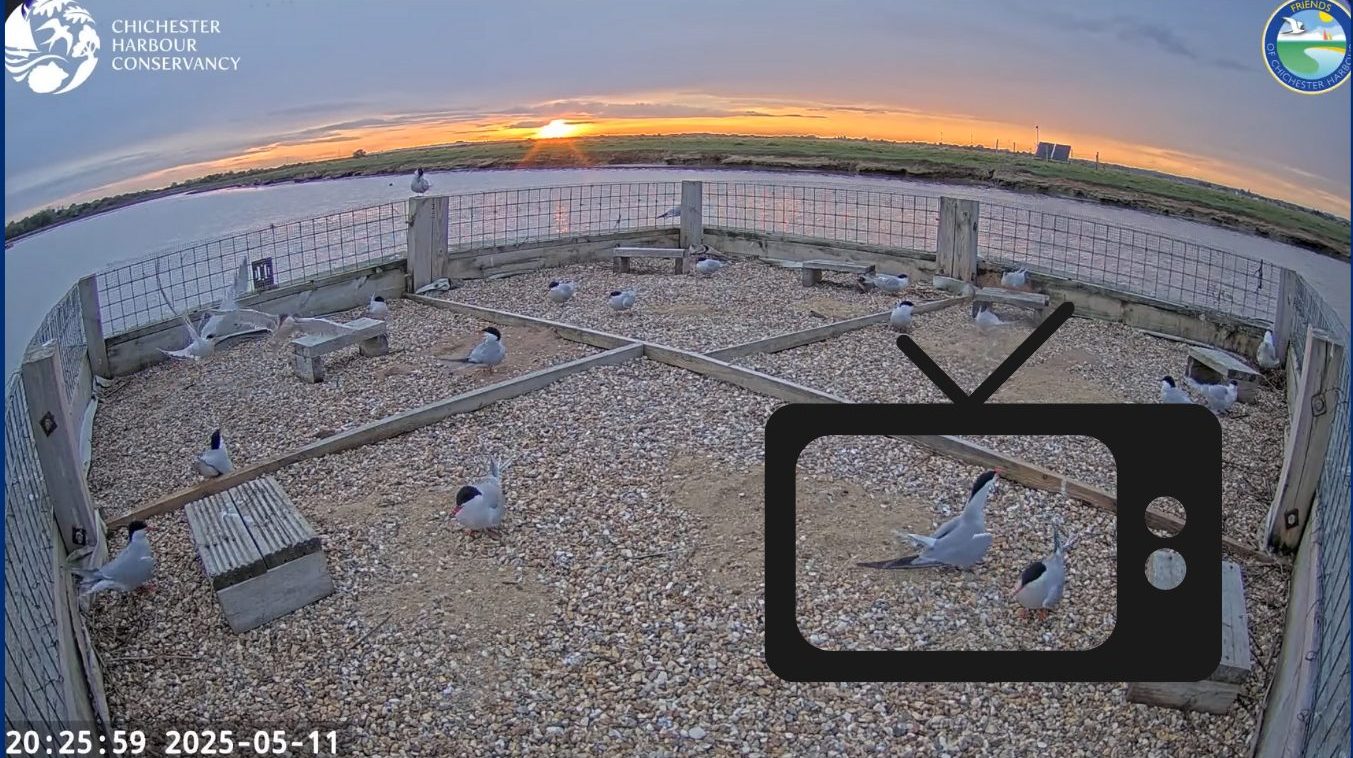
The seabirds of Chichester Harbour have returned to breed around the harbour, and you can get a unique insight into the lives of Chichester Harbour’s Common Tern population. Tern TV live streams all the action action from one of Chichester Harbour Conservancy’s tern rafts – who needs Netflix?!
Common terns fly thousands of miles each year to breed in Chichester Harbour and the Solent, and a camera situated on a tern raft provides 24/7 viewing of the characterful colony. With drama to rival Netflix’s best, follow these gregarious seabirds as they pair up, lay eggs and hatch the cutest fluffy chicks. Expect high tension, fights and hopefully a spectacular season finale as the chicks fledge and fly off.
Nature recovery in action
The shingle-covered rafts, first launched in 2019, provide safe nesting areas for Common Terns. The rafts were sorely needed; terns nest on shingle islands, spits and beaches. They had seen their habitat squeezed by disturbance from people, boats and dogs in combination with sea-level rise, increased storm surges and predation.
But this is a nature-recovery success story. Following a catastrophic decline in numbers from the late 1970s, the introduction of the rafts has brought the first signs of population recovery. Last year saw the most successful year yet for the Common Terns, with at least 75 chicks fledging from the rafts and flying off into the world.
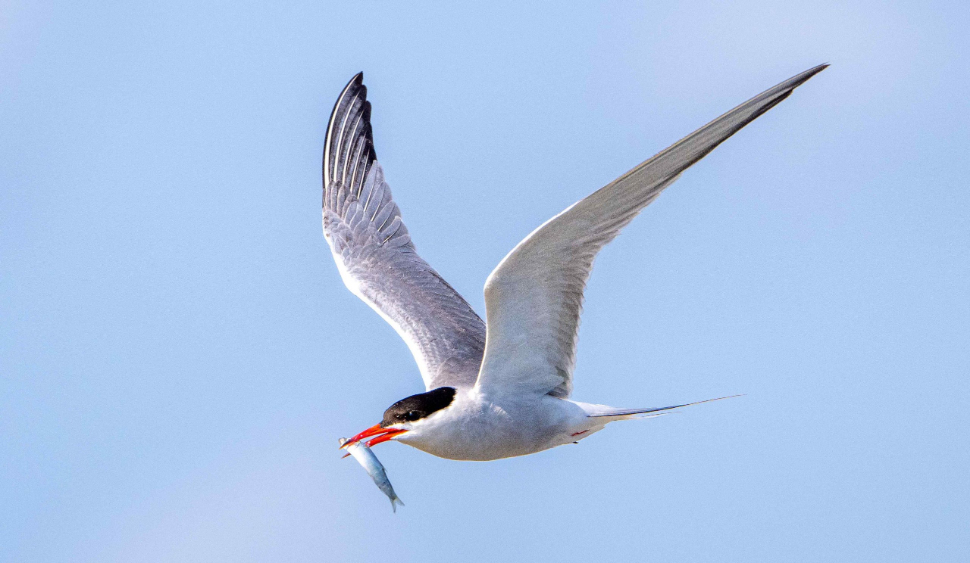
Common Tern facts:
- Common Terns pair for life. They spend their winters apart and reunite in their breeding grounds each spring.
- The oldest Common Tern on records was 33 years old, although typically they live for about 12 years.
- They spend their winters down the west coast of Africa.
Where to watch
Watch all the action live at www.conservancy.co.uk/terntv and follow Chichester Harbour Conservancy on Facebook or Instagram for regular updates.
Tern TV is generously funded by the Chichester Harbour Friends, who also funded the tern rafts through the Return of the Tern Project.