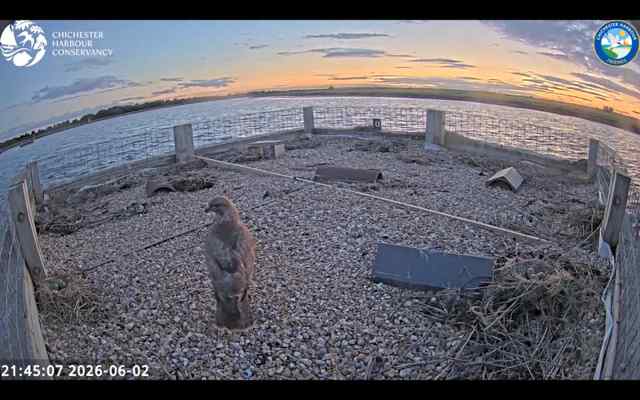
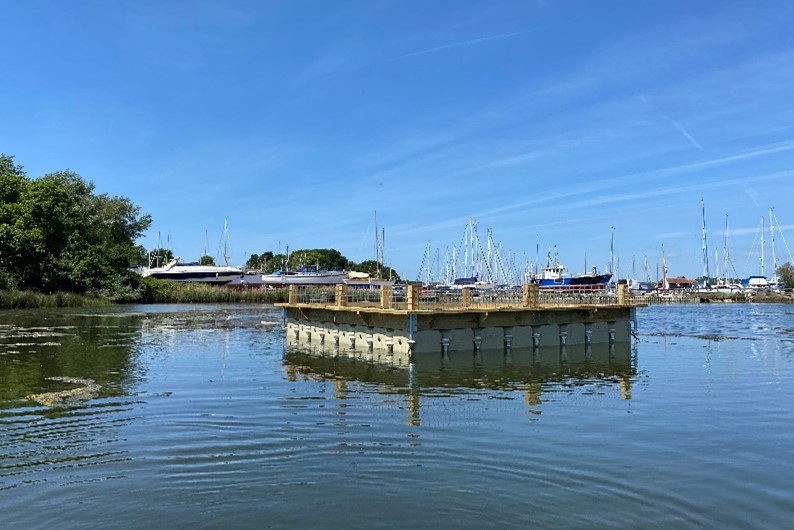
Since 2019 Chichester Harbour Conservancy has deployed shingle-covered rafts as nesting habitat for Common Terns. The rafts were put out in May and immediately colonised by Common Terns and Black-headed Gulls; by now there should be several chicks. However, despite several years of breeding success, this year the colony is experiencing predation by a Buzzard (a large bird of prey).
What is happening on the tern rafts?
Common Terns and Black-headed Gulls arrived on the rafts as soon as they were deployed in May. The birds paired up, laid and incubated their eggs. However, since the first eggs hatched at the beginning of June, a Buzzard has been visiting the rafts regularly and taking away chicks.
Why is a Buzzard predating on the chicks?
Buzzards are birds of prey that catch a variety of small mammals like voles and mice, as well as small birds, reptiles and large insects. We think this Buzzard may have a nest nearby and chicks of its own to feed. When the weather took a downturn at the beginning of June, it is likely that the poor weather led to less availability of other food sources.
A Buzzard did predate two near-fledged chicks from the raft towards the end of last season. From the distinctive markings we think that this is the same bird.
How many chicks have been taken?
We do not have a precise number, although we have seen a few incidents of predation on Tern TV, a live webcam on one of the rafts. Raft surveys indicate that a number of chicks have been taken from both Common Tern and Black-headed Gull nests, and a few nests have been abandoned. We will continue to monitor the colony closely.
Would Buzzards predate chicks if they were not on rafts?
It is natural and normal for any seabird colony, both in natural habitat and artificial habitat like the rafts to suffer from predation. Land-based predators such as foxes and avian predators like birds of prey or corvids can predate chicks (and in some cases eggs too). Other tern nesting sites across the UK are periodically subject to predation, and locally we have seen incidences within the Solent.
Although it is disheartening to see predation on the rafts, it is worth noting that there would be very few Common Terns (if any) nesting in Chichester Harbour without them.
Why doesn’t the Buzzard predate on adult birds?
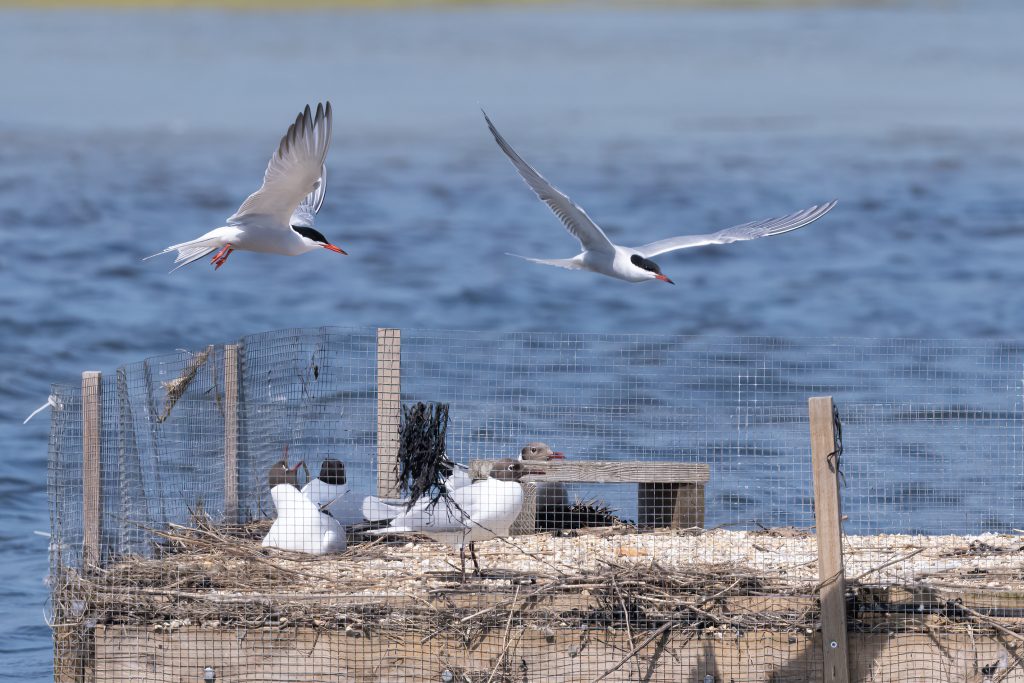
The survival tactic for birds like Common Terns is for the adults to take flight when a predator approaches. The chicks then stay very still and are relatively camouflaged, and the terns will often divebomb the predator in an attempt at diversion. If the adults were to stay put, they may be subject to predation themselves. By removing themselves from immediate harm they ensure they survive to look after remaining chicks and raise further chicks in the future.
Is there anything we can do to stop the predation?
Buzzards are a legally protected species. Although it is hard to watch the impact this bird is having on the tern rafts, it is very much a natural occurrence. That said, we are spending considerable time looking at options for improving the rafts’ resilience to avian predation in the future.
Unfortunately there is very little that we can do to deter the Buzzard this year. Following last year’s predation events, we increased the number of shelters on the rafts, but the tern chicks have been taken before they are large enough to independently take refuge. Attempting to retro-fit any solutions to the rafts brings with it it’s own complications, but we hope to have something in place for next year.
Will the terns (and gulls) go elsewhere?
It is possible that the terns and gulls nesting on the rafts may try a different site, perhaps this year or next year. The terns and gulls of the Solent can and do use different nesting sites across the region; however, they are constrained by the limited availability of suitable nesting habitat.
Will any of the chicks survive?
We don’t yet know whether many or any of the chicks will survive this year. It is possible the Buzzard may switch back to other food sources, or that the Buzzard chicks will fledge and learn to hunt elsewhere and the amount of food that the adult Buzzard requires will decline. We will continue to monitor the situation.
What does this mean for the future?
It is possible that terns and gulls may try other sites next year or return to the rafts. Whether the same Buzzard will be around next year is uncertain. We will certainly be looking at learning from elsewhere and trial solutions for deterring large avian predators.
The limiting factor for our tern and other coastal nesting bird populations is often availability of suitable habitat. We are working to improve and increase habitat options elsewhere in the harbour, including another site for tern rafts at Cobnor, and a large-scale habitat improvement project at Snowhill Marsh.
Terns are long-lived seabirds, over the course of their lifetime they will have many attempts at nesting and raising chicks. Ecologically they can withstand the occasional year when their breeding attempts fail, so long as thy successfully raise good numbers of young in the intervening years.
Why do we deploy rafts for Common Terns to nest on?
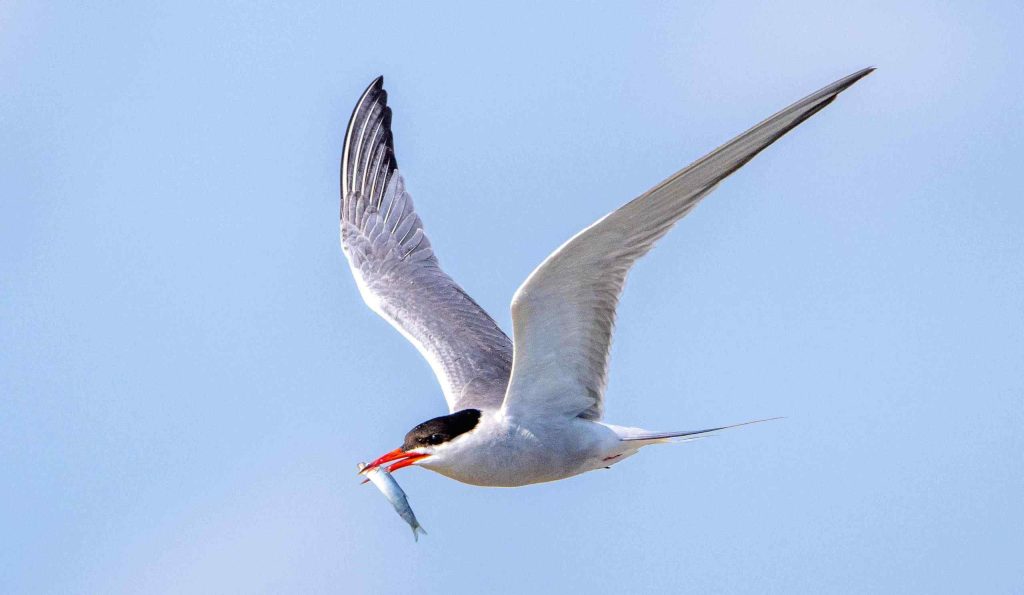
Prior to 2019 Common Terns were in significant decline across Chichester Harbour with no chicks successfully fledging for a decade. Terns’ natural nesting habitat of shingle beaches, spits and islands is under huge pressure and nest sites are regularly flooded by high spring tides and storm surges. Rafts are an excellent solution and were immediately successful, and our new larger ones were provided by the Chichester Harbour Friends’ Return of the Tern project in 2021. It has been a huge nature recovery success story, with over 260 chicks growing to fledge in the last seven years.
Tern TV
Since 2024 the Chichester Harbour Friends have funded a live webcam on one of the rafts. This has provided an insight into the breeding lives of Common Terns and Black-headed Gulls. The webcam remains live and can be watched here, with the caveat that at times viewers may find the footage unsettling.