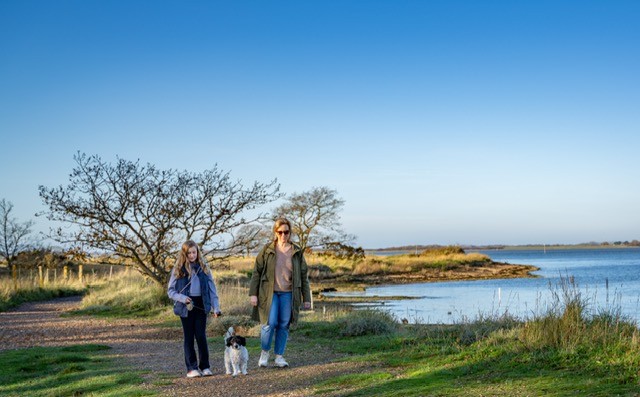
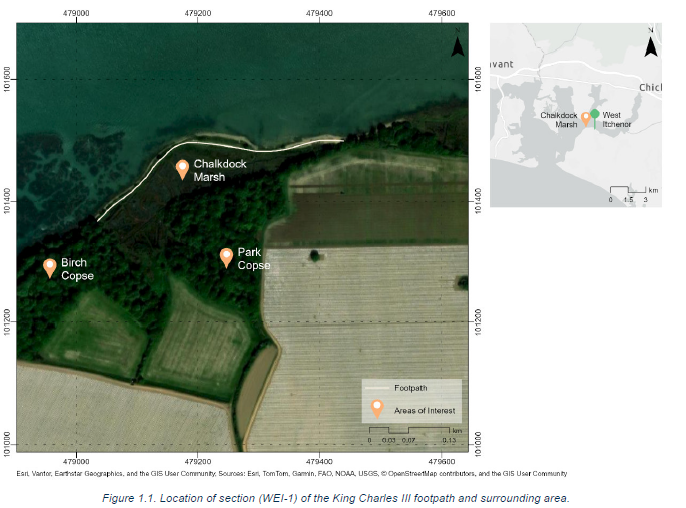
Chichester Harbour Conservancy recently commissioned a technical report into options for creating a new sustainable future route for Footpath 1 (part of the King Charles III England Coast Path) at Chalkdock Marsh, West Itchenor. The intention is that any such route will initially function as an additional route as well as providing a footpath for the future, resilient to sea-level rise.
The study responds to increasing coastal flood risk, erosion, and sea level rise, while also seeking to maximise opportunities for saltmarsh restoration and nature recovery within Chichester Harbour.
Background
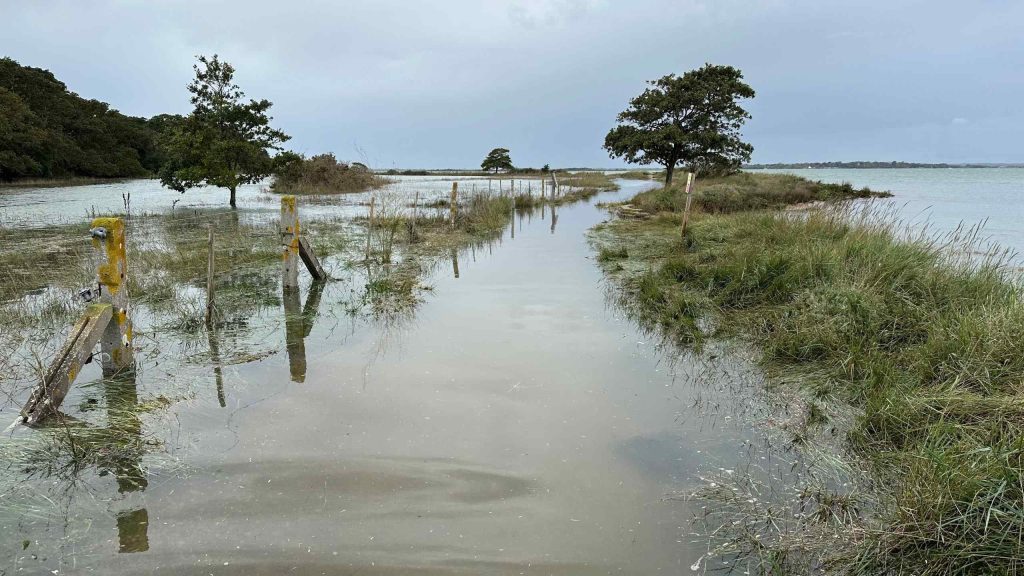
The impacts of climate change are clear to observe around Chichester Harbour, with rising sea levels, increased storminess and extreme weather events. These changes impact coastal footpaths, sea walls and cause isolated flooding events. They also have a significant and detrimental impact on intertidal habitats and wildlife.
In 2021 Natural England’s Condition Review downgraded the Chichester Harbour Site of Special Scientific Interest to “Unfavourable Declining”. This is primarily due to the loss of saltmarsh within the harbour (58% since 1945) and its poor condition, along with the continued decline of several bird species.
The report outlined an urgent need to restore and create new saltmarsh habitat to halt and reverse the decline. Chichester Harbour needs to adapt and mitigate for the impacts of climate change. This includes creating space for intertidal and coastal habitat, re-naturalising sections of the coastline, whilst also ensuring coastal access is maintained into the future for the public to enjoy.
The site
At Chalkdock, West Itchenor, the existing coastal footpath is being increasingly overtopped during high tides and storm events, causing erosion and restricting access. Maintaining safe and continuous access is becoming increasingly challenging. Analysis of sea level rise projections indicates that the frequency and extent of overtopping will increase significantly over the coming years.
The report
With the landowner agreement, Chichester Harbour Conservancy commissioned an independent technical report carried out by Haskoning. The report looks at options to:
- Create a new sustainable route for the footpath that will maintain long-term access into the future.
- Whilst seeking to maximise opportunity for saltmarsh restoration at the site, increasing the resilience of this valuable coastal habitat.
A comprehensive analysis of the site was conducted initially considering the coastal setting, projected sea level rise and impact on existing footpath, landscape characteristics, coastal flood and erosion risk, habitat creation opportunity and legal obligations. The report was funded by the Environment Agency.
The report contains
Five broad options were considered for a new footpath route. The options were developed with consideration of the following factors:
- Longevity of the footpath regarding sea level rise and erosion predictions.
- Accessibility.
- Saltmarsh habitat creation and resilience.
- Sustainability.
Each potential footpath option was assessed against different criteria, including technical, environmental, social and economic considerations.
The recommendation
Overall, the report recommends a new route that links to the existing path and runs behind the ancient woodland, measuring approximately 1.32km (Option 2). It would provide a fully accessible long-term route, with good vantage points offering views of the harbour.

What happens next?
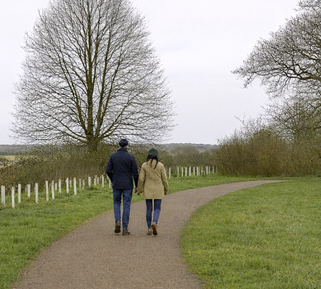
The Technical Report will help to inform decision making so that Footpath 1 remains viable and coherent in the long term.