Seagrass is a flowering plant that forms a lush underwater meadow on the seabed. Seagrasses are special because they are one of only three marine flowering plants in the world. The underwater meadows (or beds) formed by seagrass, once fringed shallow coastal waters across much of Europe, but over the course of the last century they have declined significantly, due to pressures that include coastal development, pollution, and damage caused by fishing gear and leisure boat use. This has led to a loss of this important wildlife habitat for protected creatures and reduced the benefits that people derive from seagrasses.
Seagrass beds sequester and store significant quantities of carbon and can therefore provide a natural solution towards tackling climate change. They also help mitigate the impact of more extreme weather and sea-level rise while improving water quality and stabilising the seabed.
Seagrass supports a diverse ecosystem which provide food and shelter for fish and other animals, from tiny invertebrates to marine mammals and waterfowl, are spawning, nursery and refuge areas for fish.
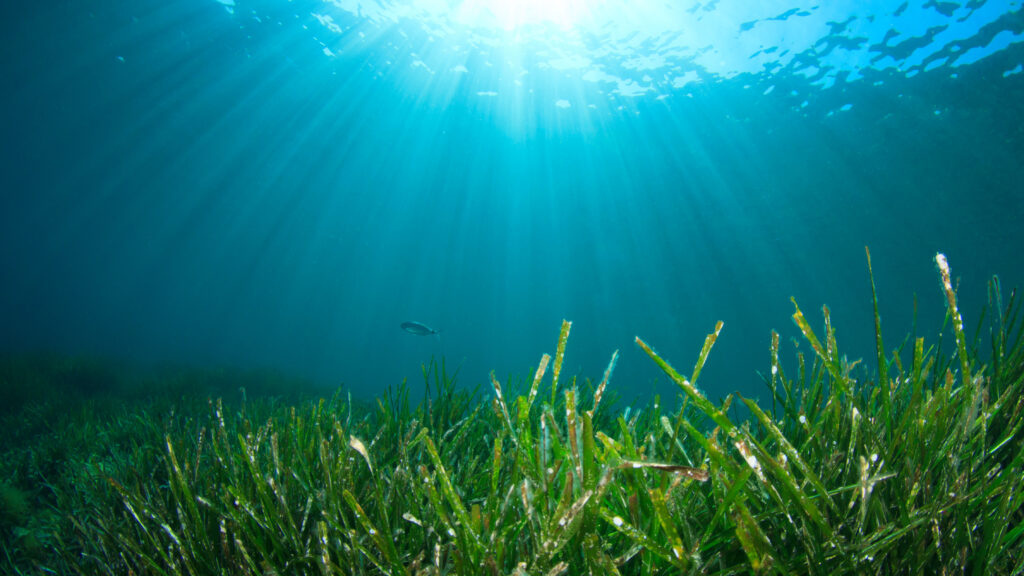
There are two recognised species of seagrass in the UK:
- Common eelgrass (Zostera marina), an intertidal to sublittoral species found in shallow, fully marine conditions on muddy to relatively coarse sediment.
- Dwarf eelgrass (Zostera noltei), occurs higher on the shore (up to the high-tide mark) on mud, sand and muddy sands and being more tolerant, inhabits areas that are entirely exposed at low tide.
Despite how vitally important seagrasses are, they are under great threat. Globally, it’s estimated that we lose an area of seagrass the size of two football pitches every hour, while in the UK it is estimated that we have lost 92% of our seagrass beds in the last century.