How farming cluster groups can unlock landscape-scale nature recovery whilst growing sustainable food.
It all started with the Grey Partridge…
So says Andrew Gentle of Hale Farm when asked about the formation of the Manhood Farming Cluster. They’re an iconic bird for farmers, a classic farmland breeding species. Forget pear trees, Grey Partridges breed and feed on the ground in open farmland. More than just a bird, they’re an indicator of a healthy farm ecosystem, including the availability of insects, seeds and other wildlife food sources. But their numbers have plummeted by 92% since the 1960s, linked with intensive farming methods and increased predation.
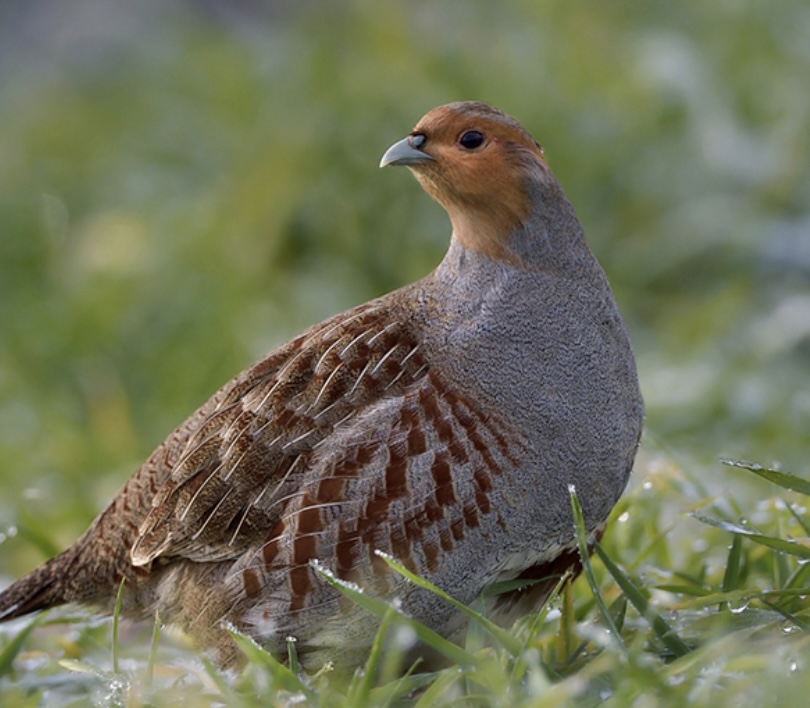
A fourth-generation arable farmer, Andrew is passionate about his role as custodian of the land; he missed the grating scratch-like call of the Grey Partridge over his fields. Then he got a call from fellow local farmer, Tom Monnington. It was time for action. During the Covid lockdown they set up an online call with more farmers on the Manhood Peninsula; they all felt the same way and a farming cluster group was born.
Cluster Farming Group
Now there are nine farmers in the Manhood Farmers’ Cluster Group, all committed to growing sustainable food for the nation, whilst working with wildlife. The facilitation costs have been funded through the Chichester Harbour National Landscape’s Farming in Protected Landscape’s (FiPL) Programme, DEFRA funding offering grants to farmers and landowners for environmental projects.
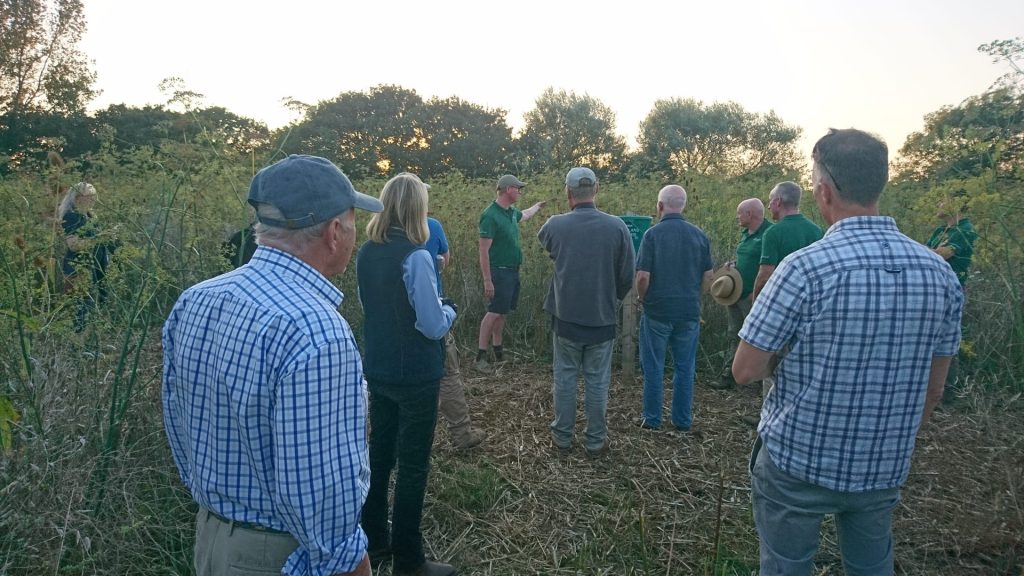
But how to help the Grey Partridge? The group took visits to successful recovery projects at Peppering Farm near Arundel and the Rotherfield Estate in Hampshire. They met specialists from the Game and Wildlife Conservation Trust and world-leading expert Francis Buner. They learned how it is possible to take targeted nature recovery action across the landscape, whilst still producing high-quality food to feed the nation.
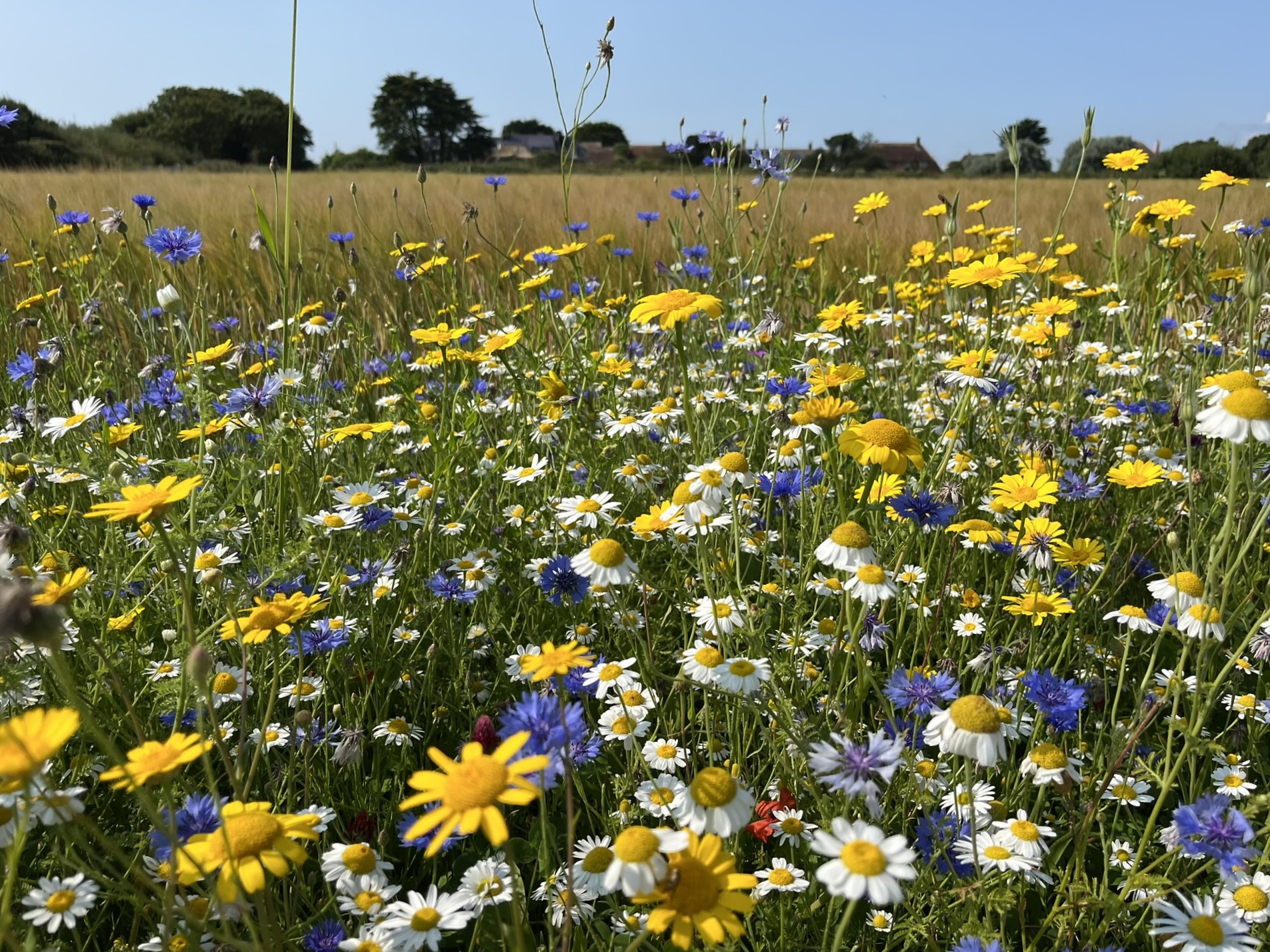
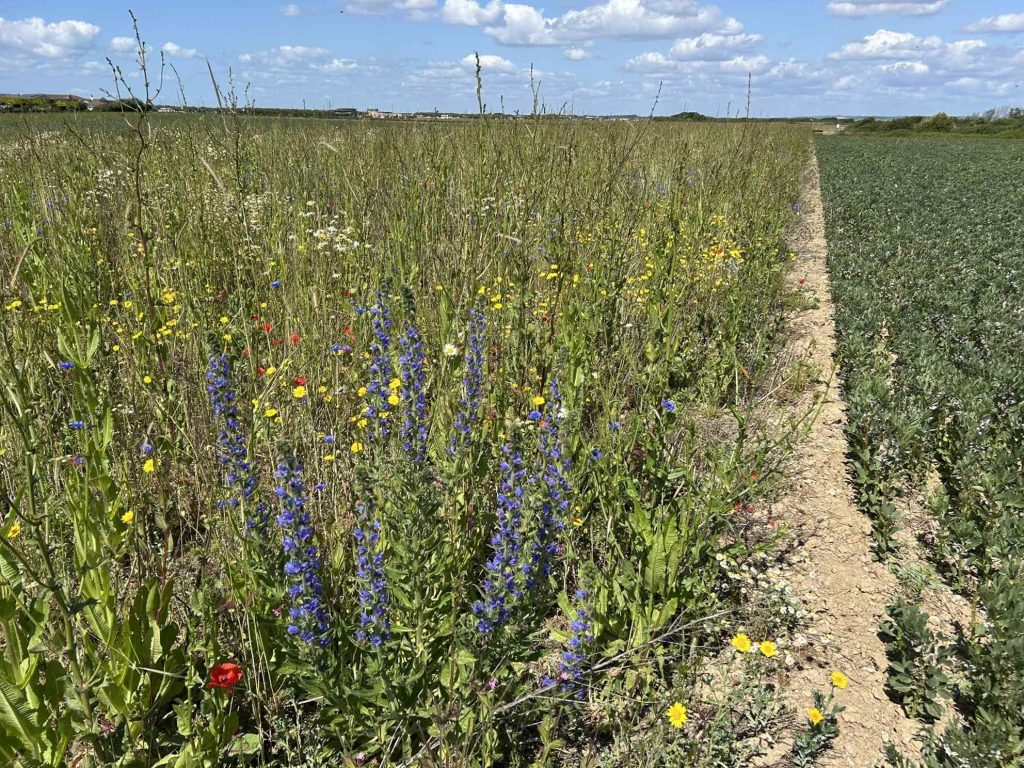
With FiPL grants and other Defra schemes, they set out to increase the area of suitable habitat for the Grey Partridge. Nearly 50 hectares of scientifically designed seed mix was planted in strips across the cluster farms. These have grown to provide year-round food for the partridges: flowers to attract the insects partridge chicks feed on and seed-rich plants to feed adult partridges through the winter. The strips also provide essential cover for them to rear their broods and protection from predators. An astonishingly beautiful mix of wildflowers and other plants, they support a wealth of biodiversity from insects to other farmland birds and mammals.
Andrew has also constructed a “beetle bank”. A long, raised mound, planted with native wildflowers and long grasses, surrounded by strips of the partridge-friendly seed mix. Sitting squarely in the middle of an arable field, the raised ground will provide an ideal nesting area for Grey Partridges. The arable crops surrounding the bank provide added protection against predators.
Farming for water quality
It’s not just the Grey Partridge, the cluster group farmers are committed to connecting wildlife habitats and improving water quality across the peninsula. Hedgerows are a key component; as well as planting kilometres of new hedgerow habitat, the farmers are restoring existing sections using traditional skills like hedge laying. Andrew points out the ditches running through land he manages near West Wittering, hundreds of metres flowing into the harbour. These have been buffered by 6-8m strips of flower-rich, species diverse planting, wildlife corridors that will prevent fertiliser run-off and leaching into harbour waters.
Increased biodiversity
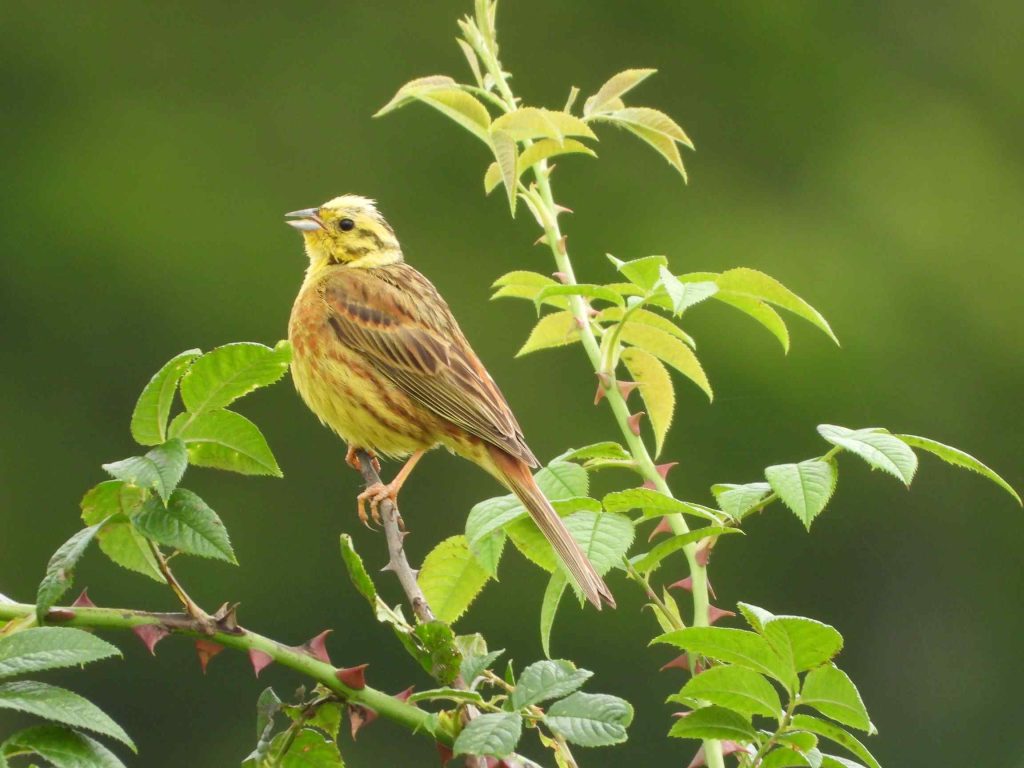
These targeted actions are paying off and farmers share their bird sightings on the cluster WhatsApp group. Linnets, Meadow Pipits, Yellowhammers, Skylarks, finches, Whitethroat and more are reaping the benefits of this nature-friendly approach to farming. So are the farmers. In a high-stress way of life the group provides a shared sense of achievement, communication and collaboration. Andrew describes how after a stressful day, spending time in the wildlife margins absorbing the sights, sounds and smells of nature offers a welcome break.
“I think the biggest delight of these margins for the group is the amount of other bird and insect life we are seeing in them. They are alive with insects and a wide variety of wild bees.”
But what of the Grey Partridges?
With critically low numbers across the UK, they could have taken decades to return here, so Andrew introduced a handful of birds to his land. He heard them call but rarely got a glimpse amongst the crops and field margins. Then during harvest last summer, the proof was running amongst the stubble. Seventeen chicks from two broods; the targeted nature recovery steps had worked and Grey Partridges were once more breeding on the Manhood Peninsula.
Its clear that Andrew and the farmers of the Manhood Farmers’ Cluster Group are deeply committed to the land they farm, the food they produce and the wildlife they support. They are proving that it is possible to work together to grow sustainable food at the same time as enhancing wildlife habitat and supporting nature recovery across the landscape.
This article first appeared in the 2026 edition of Harbour Life magazine – read more here.