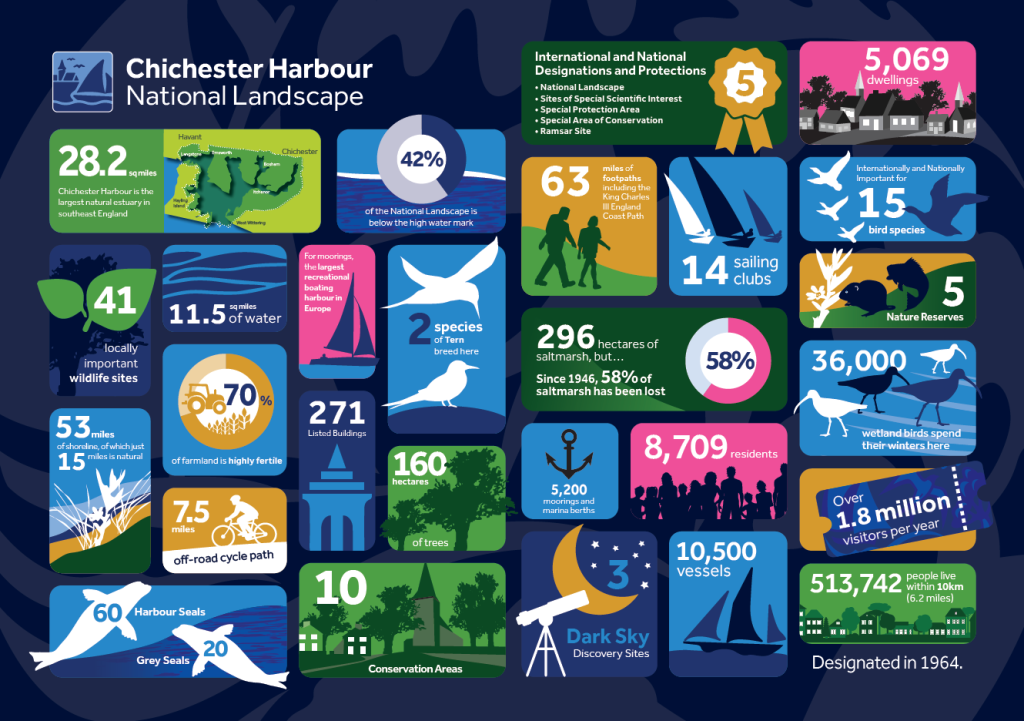
Chichester Harbour was designated in recognition of its natural beauty in 1964. These special qualities, when considered in combination, collectively define what is distinctive about Chichester Harbour National Landscape. The list of special qualities was refreshed in 2025.
1. A natural harbour. The unique blend of land and sea with expanses of open water and winding sheltered inlets. Beneath the surface is a diversity of marine wildlife. The oysters, crabs, fish, seals and the seagrass meadows, are all part of the precious underwater ecosystem.
2. The intertidal zone. Where the land meets the sea, the intertidal zone is exposed by the falling tide. Habitats include reedbeds, saltmarshes and mudflats, all vital to wildlife, forming a natural sea defence and capturing carbon. The shingle banks and sand dunes above mean high water complement the intertidal habitats.
3. The wooded shoreline. Contributing to the natural harbour, the often tree-lined shore with fragments of ancient woodland naturally stabilises the coast and softens the visual impact of coastal development.
4. The harbourside heritage. Picturesque harbourside settlements with historic buildings and monuments are built on a long history of human habitation. This rich cultural heritage was borne out of the intensive utilisation of the natural resources of the coastal zone.
5. The accessible open spaces. Sheltered inlets and open water provide unrivalled opportunities for sailing, boating and paddle sports. The footpaths are close to coastal habitats, enabling educational opportunities for all ages to better understand the natural and cultural environment. Whether enjoyed on the water or on the land, the harbour is important for health and wellbeing.
6. The farmed landscape. With fertile, sheltered soils and a mild climate, the diverse patchwork of farmland is vital for food production, wildlife and long distance views.
7. The flora and fauna. Plants and animals are essential for the health of the harbour. Flora includes trees, shrubs, grasses and mosses all shaped by the local climate, soil and topography. Fauna includes mammals, reptiles, amphibians, fish, insects and other invertebrates. Biodiversity adapts and evolves to suit this specific coastal environment.
8. The internationally important birdlife. Vast numbers of wetland birds overwinter within the harbour, flocking across the skies and providing a dramatic soundscape. In the summer seabirds like terns and gulls breed here.
9. The functioning water catchment. The river catchment connects to the harbour. Critical to the health of the harbour, these rivers and streams provide an attachment with the wider landscape delivering valuable freshwater input to the estuary.
10. The wildlife interconnectivity. The Strategic Wildlife Corridors to the north and north-east of Chichester Harbour National Landscape will become functioning habitats for a variety of species, including bats and water voles. New green corridors to the neighbouring harbours of Langstone to the west, and Pagham, to the east, are to be explored and strengthened to help facilitate the movement of wildlife.